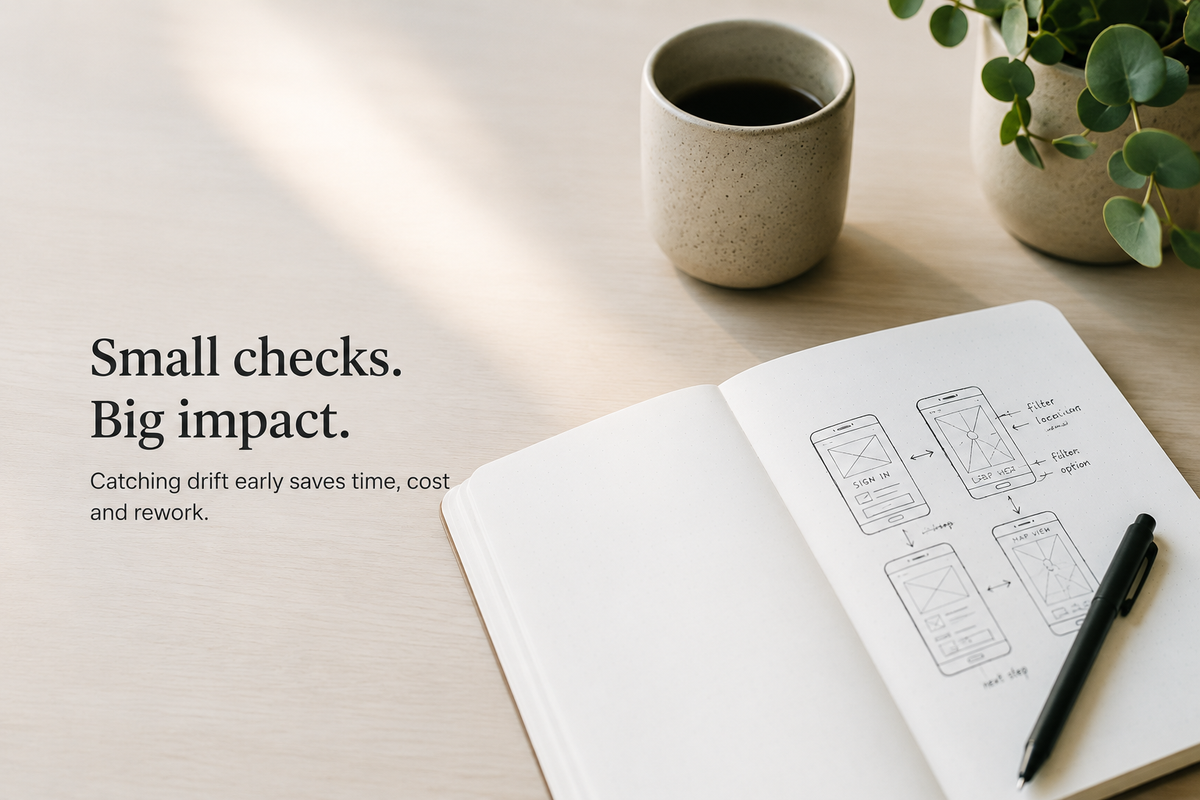
At a recent learning lunch, our team reflected on what four months in a greenfields mobile build had actually taught us. Spoiler: the biggest wins weren't the big swings and weren’t in the code. We found magic in small, almost boring checks that ended up saving a surprising amount of rework and drift.
A wrong header costs nothing to fix if nobody has built the screen yet. It costs a sprint, and an uncomfortable stand-up, once three people already have.
Where design and development drift begins
Design and development drift happens when the agreed design, written requirements and final build gradually stop matching.
Anyone who builds has probably found this gap. The space between a design decision and the moment it becomes code is where most of the costly mistakes on a build actually happen. Not in the code itself. In the handoff. A screen gets designed, a developer interprets it, and somewhere in that translation a header goes missing, an element lands on the wrong step of a flow, or a state nobody thought to document gets built from a guess.
By the time someone notices, the fix isn't a five minute change in Figma. It's a conversation about whose assumption was wrong, and a rebuild of whatever got built on top of it.
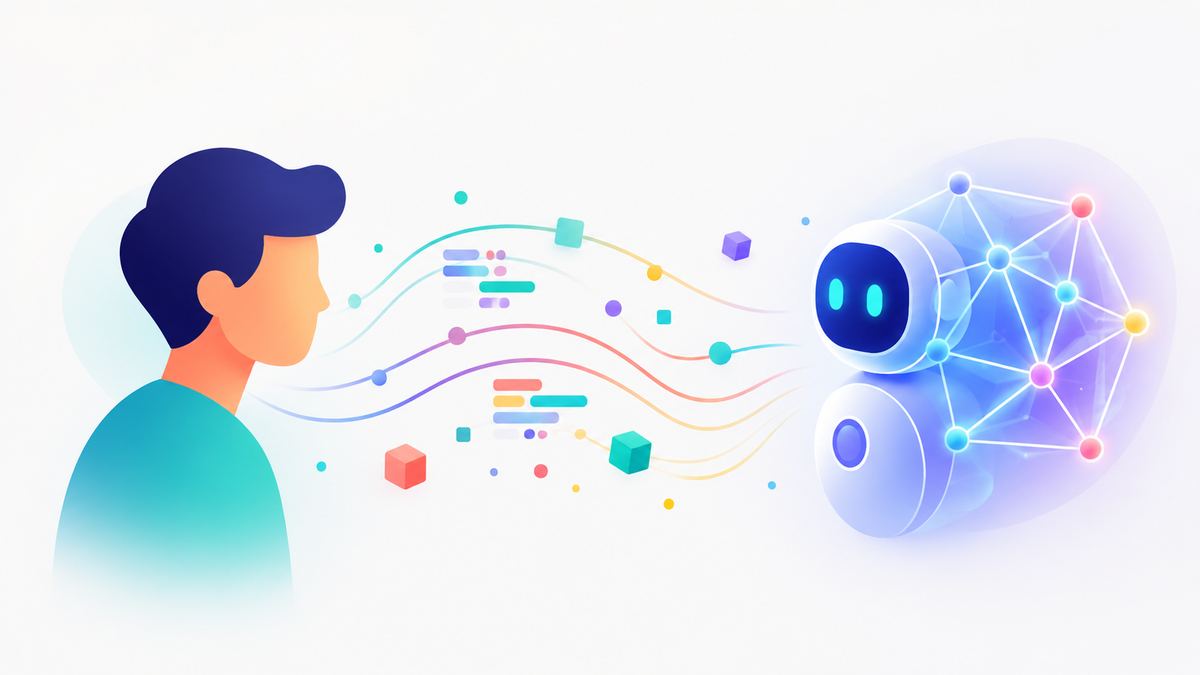
Moving that check earlier is what changed things. On this build, we took the Figma frame for a screen and asked an AI tool to check it against the written spec and the project's existing documentation, before any code got written. Not "does this look right". Specifically, does this match what we agreed to build.
What it actually caught
It found real mismatches. A header used the wrong text. An element that belonged on a later step of the flow had been placed on an earlier one. And, usefully, it told us which parts of the frame it couldn't verify at all from that view alone, rather than guessing and moving on. An AI tool that flags its own blind spots is more useful than one that quietly fills them in.
None of this is a dramatic story. Nobody caught a catastrophe. What we caught were the kind of small, boring mismatches that would otherwise have surfaced two days into the build, after a developer had already made a dozen small decisions to work around it.
What it asks of you in return
This isn't free. Getting real value from a check like this means designers documenting component states and variants more explicitly in Figma than we might have previously, since the AI can only check what it can actually see. That's a genuine cost, not a free win. In our view, totally worth it.
The same instinct, for stakeholders
The same principle showed up again outside the design file. External review used to mean feedback scattered across a design tool, a document, and a handful of email threads, all of which then had to be manually reconciled before anyone could act on it. We replaced that with a single reviewable source, a business logic table sitting alongside the design file, so stakeholders review one thing instead of tracking three. It let people focus on whether we'd got the problem right, rather than chasing where their last comment had landed.
It runs earlier again in the component library. Before building new UI, the same check happens first: does something like this already exist, should we extend it, or does it genuinely need to be new. It's a small habit. It's also the reason a codebase doesn't quietly fill up with three slightly different versions of the same button.
The pattern underneath it all
Every place where design, spec, and feedback can drift apart in silence is a place where cost gets added later, invisibly, until someone finally notices in a review meeting that nobody meant for the header to say that. Catching it earlier isn't a bigger process. It's the same review, run one step sooner, by something that doesn't get tired of checking.
None of this reduced how hard the work was. What it reduced was the load of holding all of it in your head at once, wondering whether the screen in front of you still matched what everyone agreed to three weeks ago. Four months in, a series of investments in small checks turned out to be the ones that saved the most rework.
FAQs
What is design and development drift?
Design and development drift is the gap that develops when designs, specifications, feedback and the final build stop matching. It often starts with small undocumented assumptions that become more expensive to fix once development begins.
Can AI actually catch design mistakes before code gets written?
Yes. It can check a Figma frame against a written spec and existing documentation, and flag places where they don't match, wrong header text or an element in the wrong place, before anyone starts building. It also reports what it can't verify from what it's been given, rather than guessing.
Does this replace a design review?
No. It removes the small, mechanical mismatches so the people doing the review can spend their time on judgement calls, not on comparing a screen to a spec line by line.
What does this actually cost the design process?
Designers need to document component states and variants more explicitly in Figma than they might have previously, since the check can only verify what it can see. That's real extra work up front, in exchange for catching mismatches before they're built.
How does this change stakeholder review?
Feedback moves into one reviewable source, a business logic table sitting alongside the design file, instead of being scattered across a design tool, documents and email threads that then need manual reconciliation.