Where it all began
As a young programmer in the 1990s, Andrew Hill started Treshna, hoping to make video games with his friends, but he ended up with a story that reflects the spirit of modern Christchurch.
While he chose the name Treshna just because he liked the sound of it, the company is now more well-known for another brand: GymMaster.
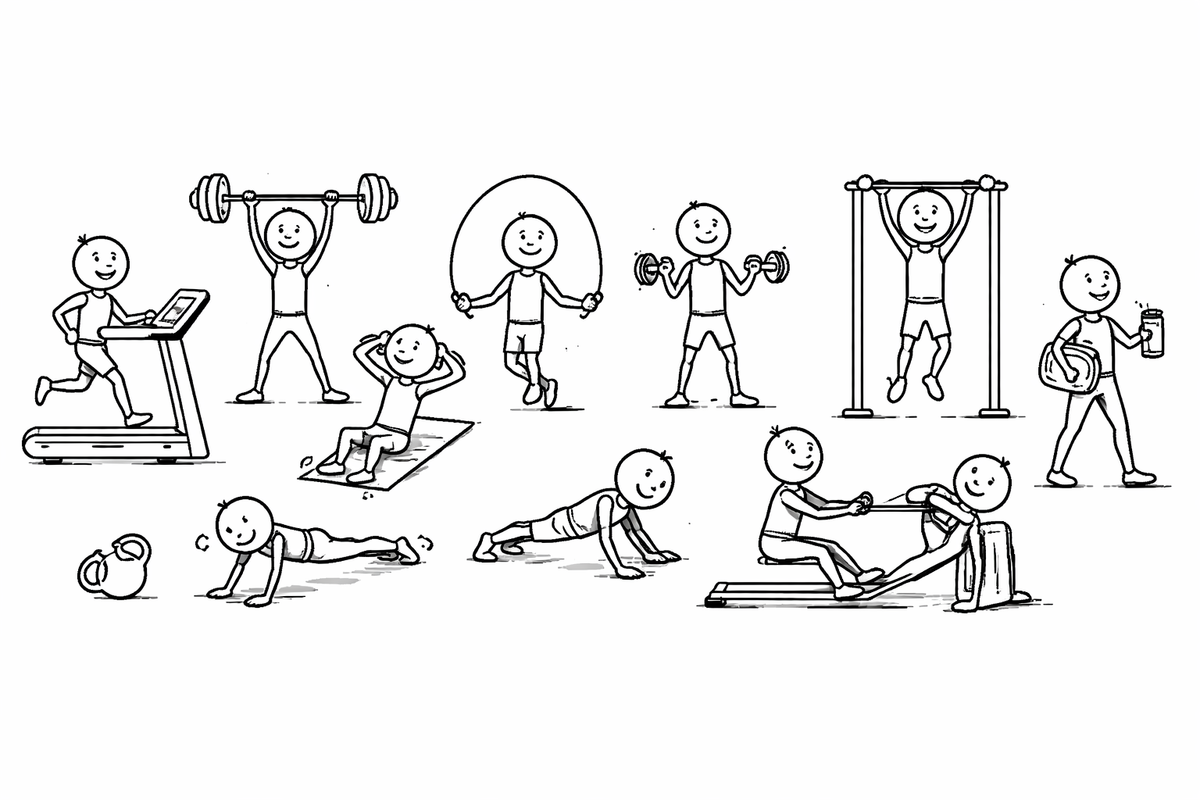
GymMaster is a gym management software that has become Treshna’s flagship product, 20 years after Andrew turned his attention away from video games and toward business software.
Today, it is used by gyms across the world and Treshna stands as testament to the spirit of resilience and intentionality in the face of adversity.
The teenage coder
Andrew began coding as a teenage video games enthusiast who had found his way from electronics into software, But it didn’t take long for him to turn his attention to the more lucrative business software world.
“I was doing computer technical work … fixing computers and setting up networking and all that sort of thing in a company, and from that I started to learn more about, what do people actually need? Oh, you need software. That got me interested in trying to figure out what’s the problem that I can actually solve.”
To get started, he needed customers; not easy to come by as a young person but Andrew was determined.
“When I was maybe sixteen or seventeen, I started door-knocking. Trying to find businesses and asking,‘Do you have any problems you need to solve?’.”
While few were willing to give a teen and his compiler the time of day, eventually he managed to find success with a hotel reservation system.
“Timing is everything in the industry. You can have the perfect solution, but if you're not delivering it when the problem is at the right time, it just languishes.”
Learning the hard way
The hotel reservation system was developed in response to existing systems being unable to make bookings past 1999 due to the infamous Y2K bug.
After five years, Andrew had to leave the software behind as inexperience soon caught up with reality.
“I made some mistakes and I partnered with the wrong people … Another company came to us and said, ‘Oh, you've got this amazing product, we can go out there and sell it for you.’ I kind of was just like, yeah, that sounds cool but, doing that, I gave up that direct connection with the client and I lost control of the product.”
While hotels may have been the start, they were far from the end.
Over the years, Treshna produced a number of products including payroll systems and project management software.
At times, Treshna was ahead of the curve, offering cloud hosting for databases, but without enough demand to make it work.
They were too early to market again with a cloud-based phone service to replace in-house PABX systems.
Andrew learned an important lesson: “Timing is everything in the industry. You can have the perfect solution, but if you're not delivering it when the problem is at the right time, it just languishes.”
By 2011, Treshna was a team of 14 working with multiple clients, building specific software to solve problems and, hopefully, become the company’s next big hit.
But, like for the rest of Christchurch, the earthquakes changed everything.
Building back better
As the 2011 earthquakes hit, Andrew’s business that was decades in the making was brought to its knees.
“The earthquake was a pivotal moment in the business because we went from having 14 staff to seven. There was a huge exodus in Christchurch ... you couldn't recruit because the population just dropped so drastically … and then a lot of the clients that you have, they also go.
“You lose your physical premises, your office, you lose your home, you lose everything.”
Andrew even questioned his own future in his home city.
“At times I was like, should I just– you know, all your friends also leave. Do I just follow? Go with my friends?”
But: “It felt like the city needed to be rebuilt and it needed people to stay to rebuild it.”
Faced with a near-blank slate and a dedication to rebuilding, Andrew had to reassess and decide what could make the core of a new, stronger Treshna.
"It wasn't successful in the market, but it was something that I thought maybe if we keep working at it, we can make it successful.”
Locking in
Andrew looked at the options among Treshna’s existing products and, surprisingly, he didn’t end up going with the one making the most money.
“It took a long time to zero in on it because it wasn't a successful product at the time of the earthquakes. It wasn't successful in the market, but it was something that I thought maybe if we keep working at it, we can make it successful.”
That product was, of course, GymMaster.
“We'd got a reasonable number of gyms in Christchurch using it and I think that was like 2007, 2008 because we had an access control system … but it hadn't hugely taken off in a way that I'd like.”
Andrew said GymMaster was losing money and taking up more time than it was worth, but he saw its potential.
While something like database hosting was essentially limited to local shores, in 2011 the world of software was looking very different as the likes of Xero and Uber set a new standard.
Andrew recognised the disruptive power of the cloud and by 2015, Treshna was all in on GymMaster.
The biggest thing he saw in the product was the potential to go global.
“You might have a reasonably good share in the New Zealand market, but then you see competitors with an aggressive sales force come into the New Zealand market and the Australian market and you think, I actually have to scale this up if I want to survive. I've actually got to compete in the US.”
Bringing success home
Not only did GymMaster compete but, with careful market planning, it won.
By focusing a dedicated sales team on local, independently-owned gyms in the southern US states, GymMaster grew its customer base year on year.
Today, GymMaster has nearly 190,000 weekly active users across more than 70 countries, and Treshna has 65 staff in Christchurch, with another 15 outside NZ.
The company also offers Serenity, a product based on the gym management software but with branding and design aimed at wellness and beauty studios.
Andrew said as well as continuing Treshna’s success, he wants to see Christchurch grow as a tech hub.
“I would like for Christchurch to be very strong in the tech industry because having more tech businesses allows cross-pollination of ideas; it just raises the bar across the industry.”
He recognises it will take “generations” of tech companies to reach powerhouse status, but sees Christchurch as having all the ingredients.
While the earthquakes may have been one of the most devastating challenges the region will ever face, Treshna demonstrates that thanks to experience, timing and dedication, Canterbury continues to build back better.